Are Ghostwriters In Demand Or Oversaturated? Real Data & Expert Analysis
The ghostwriting industry is not what it looked like ten years ago. In fact, one of the most common questions aspiring writers ask today is, “Are ghostwriters in demand?” The answer lies in how dramatically the industry has evolved. It has grown, shifted, and in many ways matured into something far more sophisticated than the old stereotype of a writer quietly penning a celebrity’s memoir. Today, ghostwriters are working with startup founders, marketing teams, LinkedIn creators, small business owners, and executives who want their ideas published but simply do not have the time to write.
The numbers back this up. The U.S. ghostwriting market is currently sitting at around $4.2 billion and is growing at approximately 7.5% annually. On a global scale, the industry generates over $1.5 billion each year. And if you have ever wondered how many of the nonfiction books you see on bestseller lists were actually written by someone other than the named author, the estimate sits between 60 and 70 percent. That is not a small number.
So yes, ghostwriters are still in demand. What has changed is the shape of that demand. The market has moved away from rewarding generalists who can write about anything passably well. What clients are actually chasing right now is premium, human-led writing that sounds like a real person with real opinions.
Are Ghostwriters In Demand Or Oversaturated? Market Reality Explained
Ghostwriting continues to evolve as businesses, executives, authors, and content creators invest more heavily in professional content. While opportunities are expanding across multiple industries, increasing competition means success often depends on specialization, expertise, and the ability to deliver measurable value rather than simply offering writing services.
Demand VS Oversaturation: What Is Actually Happening?
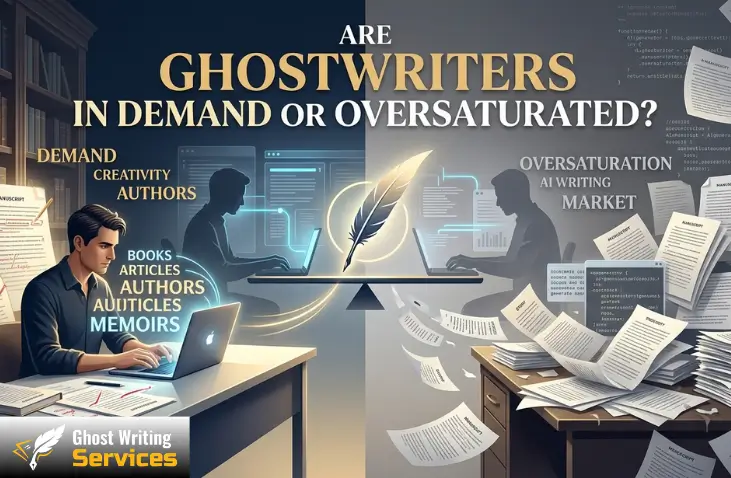
Here is the honest version of this conversation: both things are happening at once. The market is growing AND it is getting crowded. Those two facts are not contradictions. They are just describing different parts of the same market.
At the high end, ghostwriters are in high demand. There is real work, real money, and real clients who need skilled writers and cannot find enough of them. At the low end, the picture looks very different. Entry-level writers are competing in a space that is genuinely saturated, where the going rate keeps dropping and where AI tools have eaten a significant share of the work that used to sustain freelancers.
LinkedIn’s ghostwriting segment is a useful case study here. That market grew roughly three times over since 2024, and there are now more than 200 agencies operating globally in that space alone. When a market expands that quickly, it attracts a flood of new entrants and the competition intensifies fast.
The divide is real. Low-end writing is oversaturated. High-end writing is undersupplied. Understanding which side of that line you are on is probably the most important piece of self-knowledge a ghostwriter can have right now.
Why Some Ghostwriters Struggle While Others Thrive?
The writers who are finding it difficult tend to share a few patterns. No clear specialization. No distinct positioning. They are trying to compete on price and speed, which puts them directly against AI tools in a race they are not going to win. Their pitch is essentially “I can write anything,” which in today’s market translates to “I am not the obvious choice for anything.“
The writers who are doing well have made different decisions. They picked a lane. They built a reputation in one specific area and made themselves the go-to person for that thing. They have made it easy for themselves to be discovered when one searches ‘how to hire a ghostwriter?’ They charge rates that reflect real expertise, not commodity output. That is not an accident. It is a strategy.
Why Are Ghostwriters In Demand In The USA? (Core Drivers)
The demand for ghostwriters in the United States is being driven by several powerful market forces. From the rise of personal branding and content marketing to self-publishing growth and the increasing preference for high-quality human-written content, these trends continue to create opportunities for skilled ghostwriters across multiple industries.
Rise of Personal Branding and Thought Leadership
Personal branding used to be optional. These days, for executives, consultants, coaches, and founders, it is practically a business requirement. A strong personal brand generates trust, attracts inbound clients, and builds the kind of visibility that takes years to establish through traditional marketing. Research from 2024 and 2025 suggests that somewhere between 15 and 20 percent of startup founders are now actively using ghostwriters to maintain their presence, particularly on LinkedIn.
The problem most of these people share is not a shortage of ideas. It is a shortage of time and a gap in writing skill. They know what they want to say. Translating that into consistent, well-crafted content week after week is a different challenge entirely. Ghostwriter services built specifically around executive voice and thought leadership have grown steadily as a result. Are ghost writers in demand for CEOs and executives? The answer from the market is clearly yes.
Content Explosion in Digital Marketing
Any business that wants organic traffic, audience trust, or genuine digital visibility needs content. Lots of it. Blogs, Email newsletters, LinkedIn posts, case studies, white papers. The list goes on. Producing that volume of quality writing with an in-house team is expensive. Outsourcing to ghostwriters has become a practical and cost-effective alternative for companies of all sizes.
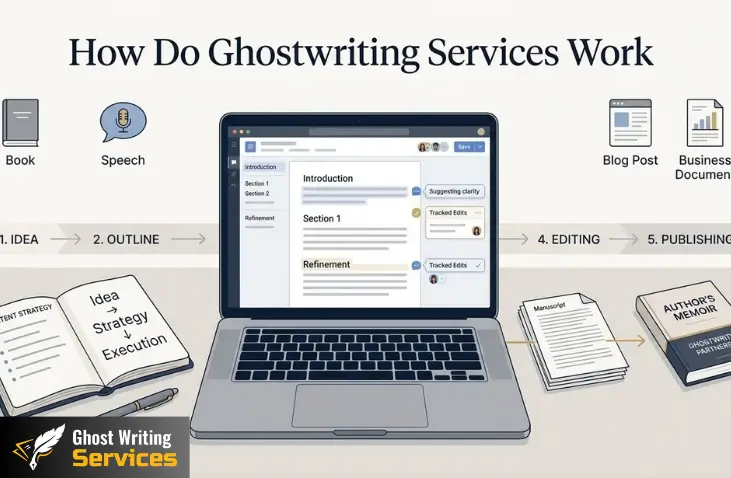
Understanding how do ghostwriting services work helps clarify why this demand is structural rather than a trend. Ghostwriters are not just writing words. They are learning a brand’s voice, understanding its audience, and maintaining a consistency that builds credibility over time. That takes skill, and businesses have figured out that good ghostwriters are worth paying for.
Self-Publishing Boom
Amazon’s publishing platform made it possible for almost anyone to write and sell a book without a traditional publisher. Entrepreneurs, coaches, and subject matter experts have jumped at the opportunity, not necessarily to earn royalties, but to establish credibility. A book is a calling card. It opens doors to speaking gigs, consulting clients, and media opportunities.
That boom in self-publishing has created steady demand for book ghostwriters. Is there demand for book ghostwriters? Consistently, yes. Memoir ghostwriting is one of the more stable categories in this space, especially for business founders and professionals who have a meaningful story but need someone else to shape it into a readable narrative.
Flight to Quality After the AI Content Flood
This one matters. AI tools made it cheap and fast to produce enormous amounts of written content. Companies experimented with it. Many saw their content output triple. And then something interesting happened: readers started tuning it out.
Industry reporting from 2025 described AI-generated content as bland and emotionless, and that perception has become widespread. Audiences can sense when they are reading something produced by a machine even if they cannot always articulate why. Google’s algorithm has also gotten better at distinguishing between content that genuinely serves readers and content that just fills space.
The result is a measurable shift toward human-written work. Businesses that care about trust and audience loyalty are willing to pay more for writing that actually sounds like a person. That is the “flight to quality” dynamic that has quietly done a lot to strengthen ghostwriting demand over the past two years.
Is Ghostwriting Oversaturated? (The Truth No One Tells You)
Many aspiring writers hear that ghostwriting is either booming or completely overcrowded, but the reality is far more nuanced. Whether ghostwriting feels saturated largely depends on the market segment, skill level, specialization, and type of clients a writer is targeting.
Entry-Level Market Saturation
Let’s be straightforward about this. If you are offering general writing services at competitive rates on Fiverr or Upwork, you are operating in a saturated market. AI has compressed the economics of basic content production to a point where the rates available for entry-level writing barely make financial sense. There are hundreds of writers competing for the same low-paying gigs, and the average going rate keeps dropping.
This is real. It is not going away. Anyone whose freelance business is built primarily on high-volume, low-rate content writing is going to continue finding the environment difficult.
Premium Market Shortage
Now here is the part of the conversation that does not get nearly enough attention.
At the top end of the ghostwriting market, there is a shortage. Not a surplus. A shortage. Top ghostwriting companies list that they are working on full-length business books and can earn between $100,000 and $250,000 per project. Ghostwriters serving executives on ongoing monthly retainers typically charge between $3,000 and $10,000 per month. Writers with genuine technical expertise in areas like fintech, healthcare, or SaaS are consistently in demand and consistently hard to find.
Are ghostwriters in high demand in these categories? Yes. Clients in these segments routinely have trouble finding the right person. The premium market is not oversaturated. It is undersupplied.
The takeaway here is simple but worth sitting with. The ghostwriting market is not broken. It is bifurcated. Writers who frame their saturation problem as a market problem are often looking at the wrong problem. They are mispositioned, not unlucky.
What Types of Ghostwriting Services Are In Demand Right Now?
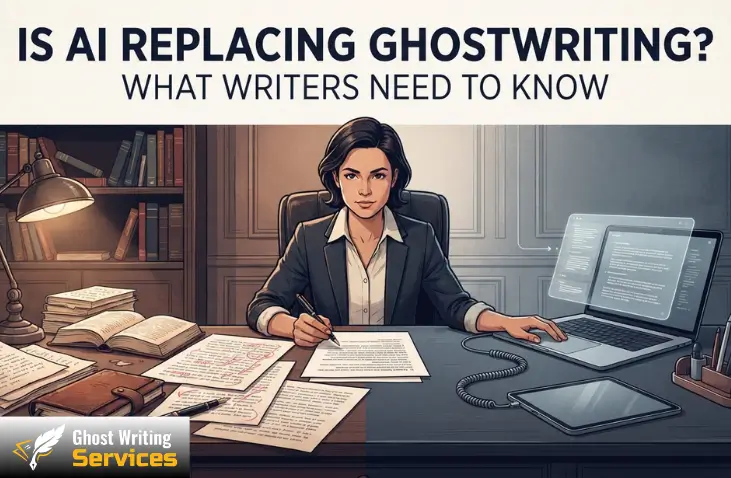
Not all ghostwriting services experience the same level of demand. As client needs evolve and AI reshapes parts of the content industry, writers are also asking, “is AI replacing ghostwriting?” In reality, certain ghostwriting specialties are growing rapidly, while others are becoming increasingly competitive and less profitable.
High-Demand Niches in 2026
What kind of ghostwriter is in most demand right now? Looking at where clients are actually spending money tells the story fairly clearly.
- LinkedIn ghostwriting sits at the top of the list. Demand for skilled LinkedIn writers has outpaced supply for the past two years, and experienced writers who can genuinely capture an individual’s voice command strong rates and long-term retainer relationships.
- Book ghostwriting, especially in nonfiction, continues to perform well. Business books, personal development titles, and founder memoirs are all steady categories. Is there demand for book ghostwriters in the self-publishing era? More than ever. Memoir writing in particular attracts clients with real budgets who understand what a well-written book can do for their brand and career.
- Business and B2B writing covers a wide range: white papers, case studies, executive communications, long-form email sequences, and industry reports. These require subject matter fluency and a level of craft that AI has not reliably replicated.
- Personal branding content for founders and executives remains one of the steadier categories in the market. Clients in this space tend to stay long-term once they find a writer who understands their voice.
Is there demand for technical ghostwriters? Very much so. As AI, cybersecurity, biotechnology, and other technical fields continue expanding, companies need writers who can explain complex ideas without dumbing them down or getting them wrong. This is a niche with a genuine shortage of qualified talent.
Speech writing services represent another area of consistent demand. Writing for the ear is a distinct skill set, and high-stakes speeches require a quality of attention that clients recognize and pay for accordingly.
Other categories with real and ongoing demand include fiction writing for hybrid and co-authored projects, story writers for hire in branded content, professional eulogy writing, and even songwriting and rhyme writing for specific creative clients. Poem ghostwriting occupies a smaller but loyal slice of the market as well.
Low-Demand and Declining Areas
Generic blog writing, bulk SEO content, and anything that can be credibly produced with a good AI prompt followed by light editing, are all declining in value. These categories are not going to recover in any meaningful way, and writers who are still anchored there need to move up the value chain. The question is not whether to specialize but how quickly.
Are Ghost Writers In Demand After AI Tools Like ChatGPT?
The rise of AI writing tools has sparked concerns about the future of ghostwriting, but the market response has been more complex than many expected. Rather than eliminating demand, AI has reshaped client expectations and increased the value of skilled ghostwriters who can deliver authentic voice, expertise, and strategic thinking.
AI’s Impact on the Ghostwriting Industry
The honest answer is that AI changed the landscape, and pretending otherwise helps no one. It accelerated production timelines, created a new form of competition, and eliminated a meaningful portion of the work that used to sustain entry-level ghostwriters. Those are real effects, and they deserve to be acknowledged.
But the framing of “AI versus ghostwriters” misses what actually happened.
Why AI Is Increasing in Demand Rather Than Killing It
Here is the dynamic that is easy to miss. AI created a content surplus. That surplus made the average quality of online content worse. Readers responded by becoming more selective. Brands that depend on audience trust responded by paying more for writing that sounds genuinely human.
Are freelance ghostwriters in demand in a world where AI can produce text instantly? Should ghostwriters receive credit? The data says yes, and the reason is that what AI produces and what ghostwriters produce are increasingly understood as different products serving different purposes. Are ghostwriters in demand for content marketing specifically? Yes, particularly for the kind of content marketing that is meant to build relationships and trust rather than just fill a content calendar.
Are ghostwriters still in demand after the AI shift? The writers who have positioned themselves as providers of authentic human voice and strategic communication have seen their value increase. The flood of AI content made genuine human writing scarcer in a relative sense, and markets price scarcity accordingly.
Human Writing VS AI Content: How the Split Works
The market has settled into a fairly clear division. AI handles cheap, fast, high-volume content where authenticity is not the point. Human ghostwriters handle premium, brand-defining, relationship-building content where voice and credibility are everything.
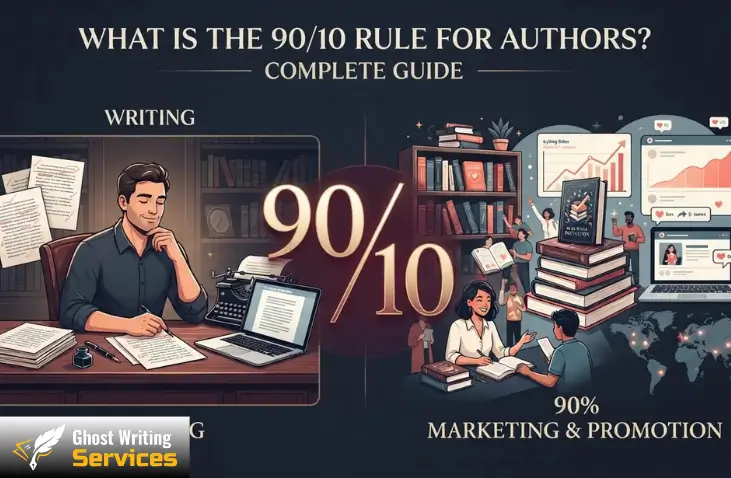
Are ghostwriters in high demand after AI tools redefined the baseline? Yes. AI did not replace ghostwriters. It filtered them. The ones who survived the shift are better positioned now than they were before it happened. This also connects with the broader discussion of what is the 90/10 rule for authors, particularly when considering how authors should balance human creativity with AI-assisted content creation.
Future Trends: Will Ghostwriters Be In Demand From 2025 To 2030?
Looking ahead, the key question is not whether ghostwriting will survive, but how the profession will evolve. Market trends suggest that demand for strategic, high-quality ghostwriting is likely to remain strong as personal branding, digital content creation, and audience-driven communication continue expanding.
Industry Growth Forecast
A projected growth rate of around 7.5% annually through 2033 is not the kind of number that describes a fading industry. It describes a maturing one. The underlying forces driving ghostwriting demand are structural: personal branding, content marketing, self-publishing, and executive thought leadership are not going anywhere. If anything, they are intensifying.
Emerging Trends Worth Watching
AI-assisted workflows are becoming a normal part of how experienced ghostwriters operate. The writers who are thriving are not rejecting AI tools. They are using them for research, outlining, and first drafts while bringing their own judgment, voice, and craft to the final product. This lets them work faster and serve more clients without sacrificing quality.
The creator economy is generating new categories of ghostwriting work that did not exist five years ago. Podcast scripts, newsletter content, course materials, and short-form video scripts are all in demand from creators who have built audiences but struggle to produce content consistently.
Are ghostwriters in demand as personal branding continues to grow? Given that platforms consistently reward individual voices over corporate ones, and given that more professionals are building businesses around their personal reputation, the outlook looks strong.
What Is Declining
Cheap bulk writing is fading. Generic SEO content is fading. Any format where volume is the primary value proposition is under pressure and likely to stay that way. The future belongs to writers who think strategically, who understand the audience and platform, and who can tell a story that connects with real people. That has always been the craft. It is just more commercially essential now than it used to be.
Conclusion: Are Ghost Writers In Demand Or Oversaturated?
After looking at all of this, here is where things stand.
- Demand is growing. The market is larger than it has ever been, and the trajectory is pointing upward. Are ghostwriters in high demand in the segments that reward specialization and quality? Yes. The data support it.
- The market is competitive but not broken. Entry-level writing faces real saturation, and the economics there are genuinely difficult. But framing the entire profession as oversaturated because the low end is crowded is like saying restaurants are failing because fast food margins are thin. The segments are different.
- Success is a positioning question more than a skill question. Are ghostwriters in demand for the writers who have niched down, built a reputation, and priced themselves to reflect real expertise? Consistently yes. The writers who are struggling are often talented people who have not yet made the positioning decisions that would change their results.
Are ghostwriters in high demand in 2026? For the right writers, in the right niches, with the right positioning, absolutely.